
A Tale Replete with Fate, Destiny and the Human Condition
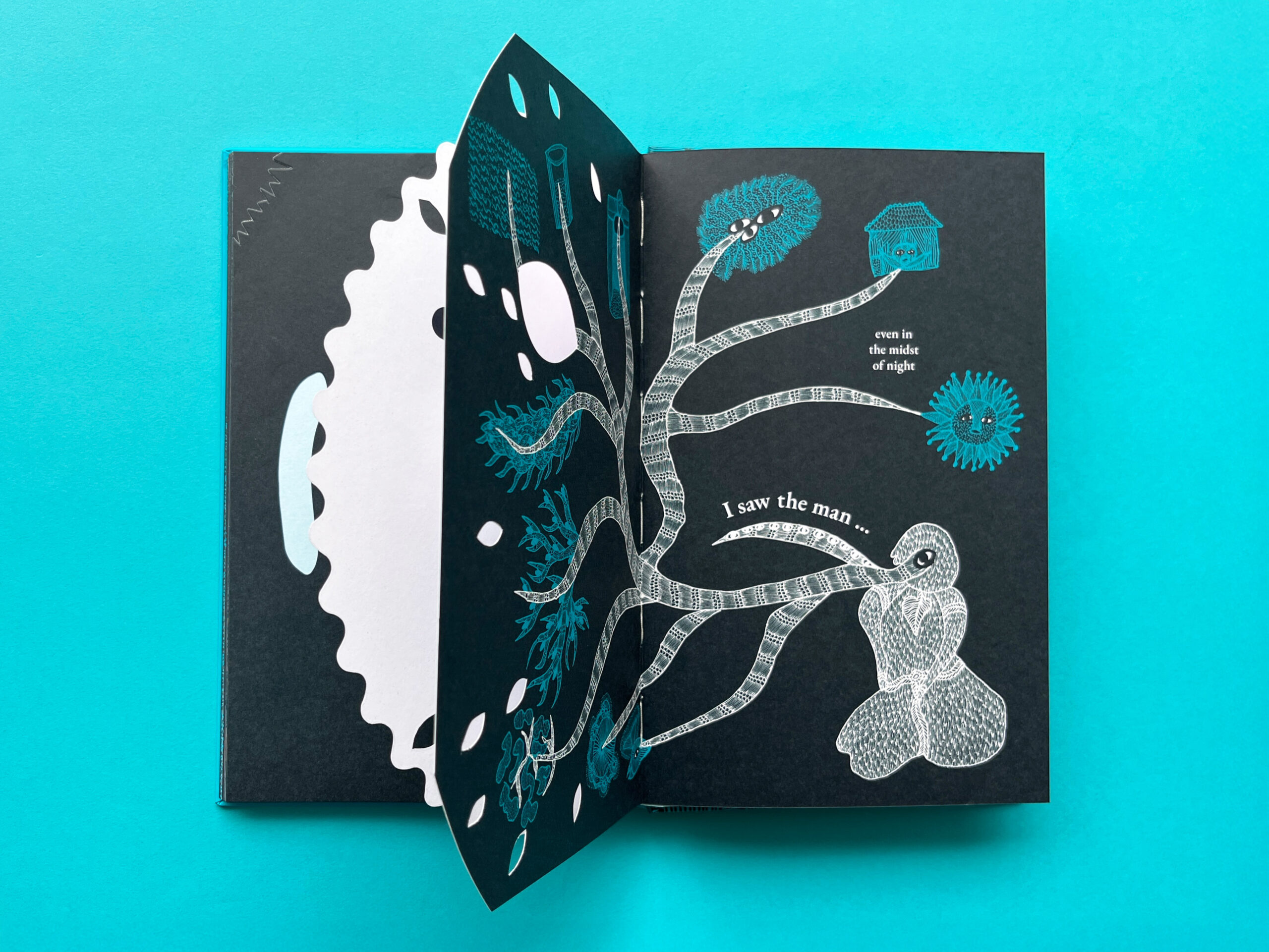
Recently, one of the most difficult projects we’ve ever done came together in a deeply satisfying way. I See The Promised Land is a graphic novel on the life of Martin Luther King Jr.
The art is by Manu Chitrakar, a scroll painter from the Bengal Patua tradition, who speaks only Bengali, and some broken Hindi. This is the first book he’s ever done. When we told him Martin Luther King’s story during a visit to Tara, we were astonished by his deep reserves of understanding. Manu had never heard about the Civil Rights Movement, but he grasped the universal significance of it right away, and was excited about painting it for us. Working with him was a joy – we pulled out visual references, talked about what it all meant, and watched as he effortlessly converted the material into his own visual idiom.
The text came about later, serendipitously. We met the African American griot, writer and performer Arthur Flowers at the Jaipur Literary Festival, and were mesmerized by his performance. So from one performing tradition to another – why not Arthur team up with Manu – and write this story?
It was a long and happy year of mediating this unlikely collaboration, going back and forth between two brilliant individuals who have never met. Their duet has turned out to be contrapuntal, yet curiously harmonic, brought together by the young Italian designer Guglielmo Rossi. His was a difficult brief – to take good care of Arthur’s words and respect Manu’s art, while melding the two together into a contemporary graphic novel.
So much for the process. What we found ourselves holding, at the end of it all, was more than we could have hoped for: a rich and moving account of an extraordinary life. The book was a work of art, in the most authentic sense of the word – unaffectedly local, yet genuinely universal. It was also entirely collaborative, so rare today in any field except perhaps the music industry.
But that’s still not the end of the story. There is an afterword, and countless ripples: Manu has gone back to the book and painted a special scroll inspired by it, for Arthur to use when he reads and performs. We have also heard that the tale of Martin Luther King jr is spreading among the Bengal Patuas – artists are painting their own scrolls of his life, and creating songs to go with it…
This is our version of the story. Arthur had his own, so we asked him to write about it for us. This is what he sent:
“Hello Tara Bookworld,
So, Ive been working on my presentation for I See The Promised Land readings, and I realized as I was doing it that I was not only telling the story of Martin Luther King, but of African American struggle. I am also trying to sing it like the Patua folk do. Its taking me to a new ground as a writer and performer.
Which is kinda fitting, this project grew of performance. Couple of years ago I did this state dept tour of India, I was at the Jaipur Literary Festival doing my delta hoodoo performance thing and it went over well, folk treating me like I was some kind of literary guru, it was a most amazing experience.
When Gita of Tara Books approached me with idea of doing a collaborative work with Patua artist, Manu, on King, well I knew nothing of Patua Art at the time but King was my boy, me being from Memphis and all, me being a product of the Civilrights Movement, considering myself as I do a part of Kings legacy, being asked to do a work on King was like fulfilling a sacred obligation. Little did I realize just how much a blessing it would be. This also gave me a chance to play the multimedia games I think literature will have to play to retain primacy in a media world.
So, Tara sent me the initial graphics, and by now I got a rough idea of the tradition and Tara Books mission, and Im thinking if he can do his traditional storytelling thing I can do mine; I come from the Griotic school of Afroam lit, black writers who consider themselves heirs to two literary traditions, the western written and the African oral, and hope in the fusion to take them both to higher ground. So I got loose with my delta storyteller voice, I had a ball writing that book.
It was like I was freed up to do some things that were very dear to my literary heart, and Gita let me do whatever I wanted. Every once in awhile I would check with her, uh Gita, did I step over the line here, language a little too down home maybe, what about all this hoodoology, all this destinywork Im doing up in here, should I dial it back a notch. But Gita didnt play that, she encourage my wild side, talking about thats what we like, Art, go for it, Art, do your thing. We got your back.
So I was able to step on out there, tried some narrative licks I have wanted to try for years, I got loose on this one. Then when I got the product it was like, well, look at this. Isnt this satisfying. After all the creative theorizing, the marketing considerations and everything that goes into a book, you want the final product to be a true work of art. Whatever that is. I just love the international flavor of it, the cosmopolitan quality it append to my body of work.
And all along it was assumed I would perform this, so Gita, little publishers mind still percolating, asked me Art, what about we send you a scroll version for performances. I was like no thank you, Ima do my thing, not Patuas thing, but she kept insisting and finally I realize she is trying to give me a traditional scroll version of the novel, and I say why sure, and sure enough, she sends it and its so beautiful Im afraid to take it out of the case, much less tote it around, and she says Arthur, its for use, the Patua schlep it around, use it like you the artist of the road you claim to be.
Then she send me these links of how its done, so now, in honor of Gitas vision, Ima try to sing it like they do, which is a whole new thing for me. So Im thinking of all these ways I can work the scroll into the act, and how I will have to condense the story depending on the timeslot, and I realize that for the tighter timeframes of book signings Im going to concentrate on Kings death in Memphis, and on his legacy.
Cause I claim Martin Luther King was the most influential force in African American destiny in my lifetime, I grew up in the world that King challenged, the quasislavery of the pre-Civilrights South. Martin Luther King rocked our world. I say in Promiseland that the Civilwar may have freed the Blacks from slavery but it was Martin Luther King freed them from bondage. In doing so he become one of the great voices of humanities struggle to be. With this work I claim a role in shaping that legacy.
In that spirit, I want the folk who come to the performances to understand what Martin Luther King meant to us then and what he means us now. What he means to the world and all its generations. I want folk to leave my performances, or to get from reading/experiencing this book, that sense of being renewed, refreshed and regenerated in struggle. The struggle of life and achievement. The enhancement of the human condition. Confident in the victory of all that is good.
I want this work to be rest for the weary.
I once again thank Gita, Manu and Tara Books for the opportunity to be part of a collaborative work of which I am unduly proud.”

- Arthur Flowers
15 people like this post.
A Book Trail in Mexico
I was invited to the Guadalajara book fair, recently, on a publisher’s fellowship. Afterwards, my travels around Mexico took me to the state of Chiapas, to visit an extraordinary book making cooperative of Mayan women called Taller Lenateros, The Woodlanders’ Workshop.
Impossible to sum up otherwise, I decided to turn my experience into a small visual trail around the world of the book, populated by readers, publishers, book fairs, writers, libraries, artists, book stores, book makers and books in all forms.
Gita Wolf, Publisher, Tara Books