
Tara Books editor and documentary film maker Arun Wolf tackles the thriving, yet confounding publishing industry in India. Encompassing over 120 languages and around 19,000 publishers, it’s a market that is vast, diverse and often difficult. But Indian publishers are innovative in their response to the challenges posed by distribution and the digital revolution.
India is both exciting and confounding. It’s a country of glorious opportunity and crippling inefficiency, of rapid economic growth and terrible inequality. A place where contradictions sit, sometimes frustratingly and often happily, side-by-side. Any publisher who has worked in India over a period of time knows that this holds as true for publishing as it does for other industries and aspects of life. Universal solutions that have emerged from elsewhere can hardly ever be successfully applied here. Unique context-driven management approaches and innovative business models are essential in order to succeed in India. In this ancient, enormous and diverse country, the only real constant today is swift change.
To confuse matters, there are no completely authoritative figures on the size of the Indian publishing industry or its rate of growth. This is because no systematic studies or comprehensive statistics exist, for books published with or without ISBN numbers. It would be nearly impossible, or at least severely daunting, to attempt to quantify a large and disorganised sector that is composed mostly of privately-owned family-run enterprises. But the FICCI (Federation of Indian Chambers of Commerce) has tried, and their estimates peg the annual turnover of the Indian publishing industry in 2012 at 1000 billion Indian Rupees and the growth rate at 30 percent. This makes India the 3rd largest English language publisher in the world and 7th largest worldwide, when all languages are counted.
One thing is clear – Indian publishing is on the ascendency. It’s an industry that is evolving at blinding speeds, as a result of a growing population of young people who are increasingly educated and literate, as well as the rising income of an affluent urban market. So it’s a market of huge opportunity, but it’s also complex and in no way homogenous. Of the 90,000 or so titles that are brought out every year by approximately 19,000 publishers in India, only 50 percent are in Hindi and English. The remaining half are distributed across about 120 major languages (22 of which are officially recognised).
What this means is that several markets actually coexist, structured and differentiated not only by genre but also by language. Trade publishing is estimated by the FCCI to account for 20 percent of the industry. The largest sector is by far education, which is dominated by state-owned publishers. Although the abundant number of titles that private publishers put out makes them important players in the sector as well. But a lack of access to books and knowledge remains a key issue, for a large underprivileged section of society in urban and rural India.
In short, it is an unsaturated market with immense possibility. But it is also riddled with its own peculiar challenges. A lack of professionalism (and availability of properly trained talent), inadequate or undeveloped distribution channels, patchy infrastructure and logistical gaps (the sheer size of the country is a problem) and rampant piracy (especially in educational publishing) are some of the difficulties that publishers in India are routinely forced to confront. No matter whether large multinationals or small independent publishers, local know-how is crucial. Indian conditions and consumers are quite unlike those in other parts of the world. They aren’t even the same across India.
Distribution: strategic mergers
Sensing the possibilities afforded by the market, all the major multinational publishing houses have already established operations in India with varying degrees of success. They have looked to make their mark in a market with a growing number of retail chains and a proliferation of e-commerce start-ups. The last few years have also seen an explosion in literary festivals, none better known than the Jaipur Literature Festival, which sees the big names in international publishing rub shoulders with their Indian counterparts. This has meant less room to manoeuvre for Indian publishers in a highly-competitive English language market, but has had little influence on a vibrant and multi-faceted Indian language publishing scene, or on educational publishing. The bulk of the annual sales for regional language publishers comes from less glamorous local consumer fairs, travelling individual book-sellers, and the State, which is a major buyer.
The merger of Penguin and Random House, which will bring together an unprecedented 250 imprints in the world’s biggest publishing house, represents an unparalleled trend towards concentration and internationalisation. It’s a strategic response by their holding companies, Britain’s Pearson and Germany’s Bertlesmann, to gain negotiating leverage with their largest sales platforms – Amazon, Apple and Google. “The consumer publishing industry is going through a period of tumultuous change, propelled by digital technologies and the giant companies that dominate them,” Pearson’s former CEO, Majorie Scardino, wrote in an email to her employees. “The book publishing industry today is remarkable for being composed of a few large, and a lot of relatively small companies, and there probably isn’t room for them all – they’re going to have to get together.”
The real financial clout lies in distribution and retail – both in the physical and digital realms. Penguin Random House, which will be responsible for publishing around one in every four books, is an attempt to address the challenges posed by the new booksellers. But even outside of global big-player mergers, similar trends towards convergence and symbiotic partnerships have surfaced in India. Industry consolidation and the increasing importance of e-books has forced Indian publishers to rethink their business models, and mergers have been one of the key responses.
In India the answer seems to lie in both fighting the tide and swimming with the current. While most large media houses are replicating a common pattern across the globe, Indian publishing houses have found ways of not being left behind. Large Indian companies like Rupa & Co hold exclusive distribution rights to international titles, and most multinationals survive on the strength of the Indian editions of globally famous titles. But even in an extremely competitive English-language market, there has actually been a rise in the number of successful independent publishers. By and large, smaller independent publishers have been better at identifying subject areas, themes, and constituencies. Perhaps because foreign publishers see Indian publishing more as a market of consumers than producers, much of the cutting edge content has come from independents. Some of these smaller houses are well established in the domestic market, and are increasingly looking to make their presence felt globally either through distribution arrangements or foreign rights sales.
The biggest challenge that stares small and innovative publishers in the face is distribution. Affordability and pricing are a problem, particularly for the working classes or in rural areas, but even stocking the big retail chains in the Indian mega cities is often a nightmare. Children’s book publishing, in particular, has for long suffered from a lack of visibility. “Even while fiction and non-fiction titles are given pride of place in Indian bookstores, it’s a different story when it comes to children’s books,” Sayoni Basu, director of the newly-launched Duckbill books, writes in their blog. “I visited four retail outlets today. Two were chain shops, two were independent bookshops. But in all of them the situation was the same. In one tiny corner, either at the far rear of the shop or somewhere else equally inconspicuous, is a tiny shelf or two, labelled Indian children’s books. Often nearby is a gleaming wall of shiny international children’s books. I found the corners only after specifically asking for them, in two cases I had walked by them searching but failed to locate them.”
Duckbill was started by Anushka Ravishankar and Sayoni Basu, in partnership with Westland, which is owned by the Tata group. Westland includes EastWest Books and Tranquebar Press and possess one of the best distribution networks. Moving into a new market with Duckbill, by partnering with two of the best known names in children’s publishing, was an enticing proposition for them. It is another example of a coming together of commercial reach with creative content. Sayoni Basu sums the advantageous of the partnership succinctly, “We checked out bookshops when we were looking for a partner, and we noticed Westland seemed to be rather well represented. So we figured they were good partners because they seemed to be getting books into shops.”
For publishers looking to be creative and different with their children’s list, another major deterrent is the Indian market’s emphasis on narratives with explicit morals and academic content. “A lot of parents want books with only educational value. Some schools are extremely censorial about content. But we are ostrich-like in ignoring these things. We believe that good stories will eventually win readers. And since we are unconstrained by company revenue targets, we are being extremely selective about the books we publish so that we can truly stand by each of them. We think that this time and space helps to create wonderful books, and that in the long term this will work!” says Sayoni Basu.
Digital opportunities, not problems
The emergence of online retail has been a boon to both publishers and consumers in India. It has given publishers the ability to bypass dodgy supply chains and book buyers have easier access to books at lower prices. Although the Kindle India Store went live last August and Indian publishers sell their books overseas through Amazon, the company’s long-imminent full-scale entry into the Indian market hasn’t materialised just yet. FDI (Foreign Direct Investment) legislation that prevents foreign companies from being majority stakeholders in e-commerce retail in India has kept Amazon at bay so far.
But in the meantime, Indian start-ups like Flipkart have made merry. Flipkart was founded in 2007 and is, in all likelihood, the largest single bookseller in India today. On its rise to the top of the e-commerce pile, Flipkart has built an innovative delivery network based on decentralised nodes, couriers, and in-house delivery teams. Quick shipping coupled with offering cash-on-delivery models has made them the most popular choice in a country where a lack of trust in online transactions and unreliable shipping continue to persist. One of the biggest pushes for eBooks in India has comes from the growth of online shopping.
E-publishing is both a great unknown and an enticing prospect for publishers in India. It means that content no longer has to traverse long distances to be stocked in shops or land in the laps of readers. While this is a great advantage, there is also much insecurity about the future role of printed material and confusion about the best path to take in a rapidly evolving digital arena. Acronyms like ePUB, mobi, XML, and DRM are still mysteries for many publishers who have little knowledge about formats and platforms. One of the main areas of concern in e-publishing is copyright protection and preventing piracy. Pricing and the appropriate models to adopt to monetise content also remain a grey-area.
Even if the market share of e-books is currently small, the potential is obvious to most. The pressure on publishers to adapt or be left behind, comes from the youthful demography of the country and the speed of technological adoption. The number of users who own devices with e-reading capabilities is growing fast. Most of these are smartphones and tablets in the hands of young English-speaking Indians, who are very active online. According to most studies India is Android country, with Android devices already cornering a market share above 55 percent and briskly gaining more ground. This is almost certainly going to lead to new developments in publishing, with the potential it brings for book apps and enhanced e-books.
But the digital divide still looms large. To balance the hype with a less luminous outlook – India might have the largest number of Facebook users in the world, but computers and the internet still remain out of reach for 90 percent of the population according to the IAMAI (Internet and Mobile Association of India). A recent World Bank report finds that India has 70 mobile subscriptions per 100 people and one of the highest average mobile data speeds. The number of smartphone and tablet users is much lower than in other less “mobile” countries, but the largest growth in new internet users comes from mobile devices. Recognising the opportunity, the Indian government commissioned the low-cost Aakash tablets to enhance the use of internet and computing in education. The Aakash 2 was released in November 2012, and will be sold to students at a subsidised price of 1,130 Rupees (about 20 USD).
The idea to equip 220 million young people with the Aakash tablet, indicates that low cost mobile devices could become viable platforms for widespread digital reading. The only hitch is that India doesn’t have a mass-scale reading tradition. Although sales figures for books are on the rise, an increasingly smaller proportion of a growing literate public is reading. A recent report by FICCI, finds that only one-fourth of the young population describe themselves as book readers. This makes the group of people who are techno-savy and literature-loving an even smaller proportion. But given that India’s population is around 1.2 billion, even this is a substantial number that provides tremendous opportunity.
Is it possible to bridge the digital divide and encourage a reading habit at the same time? Pratham Books, a not-for-profit publisher based in Bangalore (India’s IT hub), has taken big strides forward in learning how to make the most of digital opportunities to spread non-functional reading. “Our mission is to see a book in every child’s hand and democratise the joy of reading. While almost all children in India are now enrolled in school, very few of them have access to the simple joyful storybooks that children from middle and upper income segments take for granted. We strive for inclusiveness and to reach children that the market would otherwise not reach,” says Suzanne Singh, who has worked at Pratham Books since its inception in 2004.
Pratham Books has already made a name for itself by showing that slashing prices can lead to higher print runs and sales, without having to compromise on quality of content or production. Given the problems afflicting physical distribution, liberating content from the strictures of print and copyright was a natural transition to realise their goal of reaching as many children as possible in as many languages as possible. E-books are available at no cost on their website, under a Creative Commons license. Their authors and illustrators are happy because they gain recognition and a large audience for their work – 20,000 visitors a month on various platforms, and around 40 books have been viewed approximately 200,000 times.
“The Creative Commons model allows people to remix the content – translate it, change formats, develop new stories and so on. Our books have been translated into Assamese, Lojban, German, Spanish and other languages. People have also converted our books into Braille and DAISY formats, and iPad and Android apps have been developed. It has worked extremely well for us – our books are reaching newer audiences in newer ways,” says Suzanne Singh. The strategy to move from being content curators to collaborative content creation, wouldn’t have possible without effectively using social media to build a vibrant community. E-books and cloud-based tools have helped Pratham Books achieve scalability, whether it is through reaching out to readers on Twitter, sharing content on Scribd or holding reading sessions on Skype.
While such a model might seem unattractive to mainstream market-driven publishers, there is much to learn from the example of Pratham Books. On the one hand, there is plenty of evidence to suggest that giving away e-books for free actually increases sales. Paulo Coelho figured this out pretty soon, and set up a blog called Pirate Coelho back in 1999. Since then he has actively encouraged piracy and this has consistently boosted sales. Giving something away for free, even if you want to make a profit from it, seems to be pretty wise strategy.
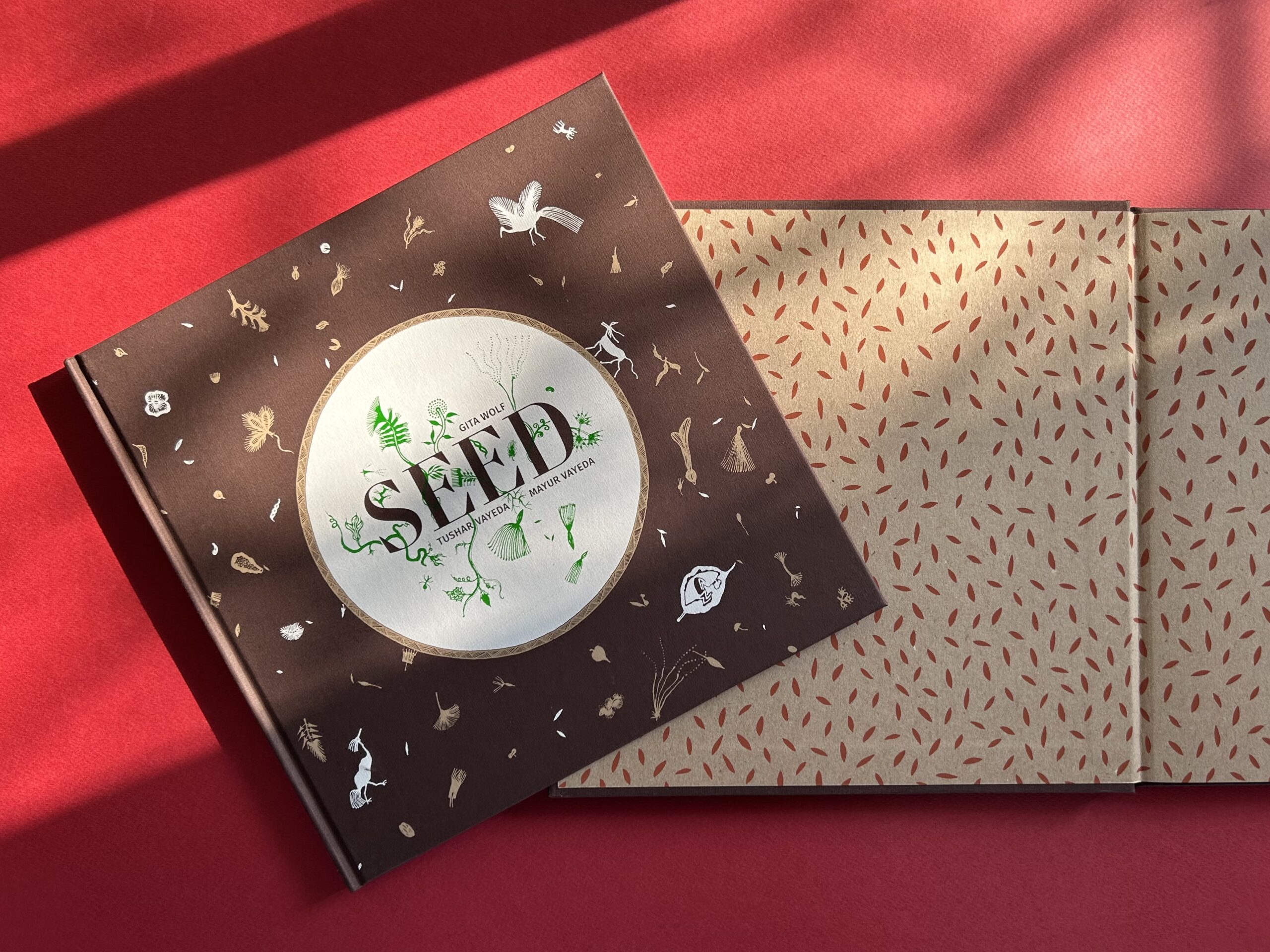
One the other hand, there is a need for content creators to experiment and find innovative ways of framing content digitally. Fascinating possibilities would emerge in India, were a strong IT sector come together with the creative industries. Gita Wolf of Tarabooks, says, “Some of our books are handmade and very tactile. They are created with an artisanal approach and it’s not possible to replicate this on screens. So far we have concentrated on the book as a physical object and used digital spaces to add layers to the culture of the book. We aren’t against technology or exploring new mediums. But we believe that just turning physical books into identical e-books doesn’t make for a special reading experience. Digital forms require an exploration of their own intrinsic potential.”
For the foreseeable future, printed books and e-books are likely to flourish together. But that’s not unusual because many apparently contrary things coexist in India today – bullock carts share the road with hi-tech cars, a lack of good primary education persists alongside some of the best qualified doctors and engineers. With this unique mixture of old and new, of diffidence and aspiration, of strengths and difficulties – it’s hardly surprising that a truly interesting and diverse publishing scene continues to thrive. But then that’s what India is all about.
Arun Wolf