
Folk and Tribal Art in Children’s Literature
“It may seem, at first glance, that the majority is the dominant force in every society, but those who dramatically change their world, now and throughout history, always belong to the minority.” With this motto, the International Board on Books for Young People – IBBY – organised their Congress this year in Santiago de Compostela, Spain. The theme was The Strength of Minorities. Given Tara’s work with folk and tribal art communities, I was invited to contribute, to talk about how these ‘outsider’ artists could change the course of children’s literature.
The fundamental question for me had to do with how we can re-imagine children’s literature. What possibilities are there in a publishing world that is increasingly dominated by big business, bestsellers, and a certain sameness in what we think is suitable for children?
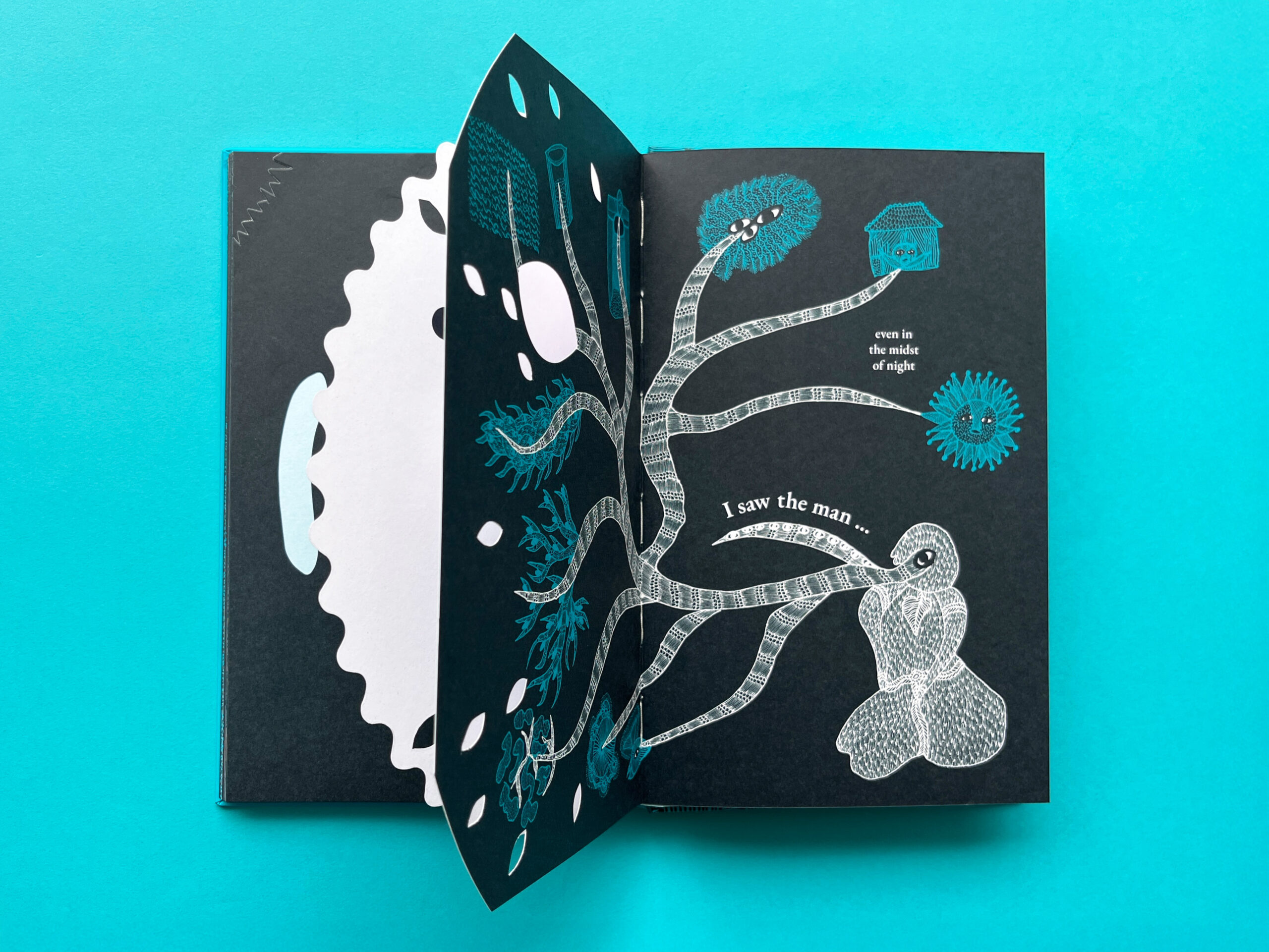
When we started publishing in 1995, there were very few picture books for children in India. Ours has been a largely oral tradition, and the notion of children’s literature came from abroad. So Indian children’s books tended to be derivative. To create something that was original, we looked around for Indian illustrators, and what excited us most was the potential we saw in traditional artists.
These were folk and tribal artists, from rural and remote communities, who painted according to certain traditional styles of rendering. Although there were many very different traditions, most of this art arose from common everyday sources: the decorating of homes, community spaces or places of worship. Much of it was, and still is, painted on walls and floors.
With time, as it happened, things changed. Many artists now also paint on paper, and sell their work. But before we began working with them, hardly anyone had made a book. Illiterate and poor, many of them were, by definition, outside the conversation of mainstream bookmaking. And yet they had a wealth of talent, imagination and intelligence that we found humbling.
There was another important personal reason why we chose to work with them. Such collaborations cut through a lot of the hierarchies that we ourselves are part of. As middle class English speaking Indians, working creatively with these artists enabled us to go beyond many of the limitations of caste and class that language carries. The perspectives these artists bring are unlike anything we would ever have come up with. They are invaluable in our search for alternatives.
Traditional artists, as the name suggests, work within an inherited tradition, but many of them are eager to expore new ways of taking their work forward. Tradition is something that changes constantly. How to bring these art styles into the form of a contemporary children’s book, without losing the original essence, has been an ongoing concern with us. Every intervention carries a certain responsibility. Added to that, not every artist we encounter may want to innovate – it is an adventurous person who wants to experiment. Much depends on the tradition, too – on what it allows. So our collaboration with these artists takes many forms: sometimes we nudge them to illustrate new stories, at other times to tell their own. There is no formula – each project needs a different kind of intervention.
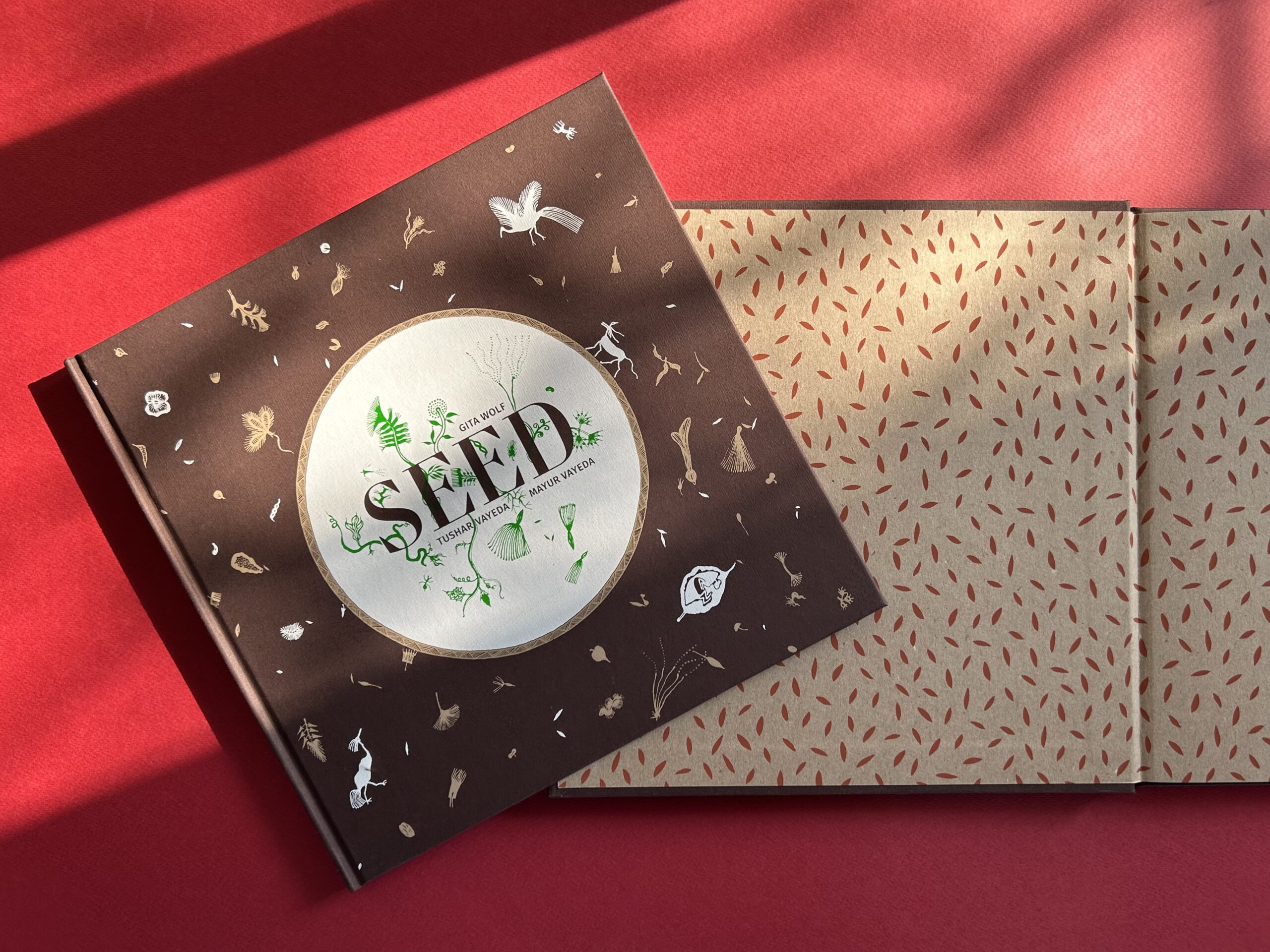
In some cases, it is enough to bring a collection of art within a strong concept:
At other times, it helps to retain the basic way that the artists paint, but give them a novel subject to approach:

Instead of the different activities present in a traditional Warli painting, we asked the artists to draw the characters performing just one action per picture.

The result is our book 'Do!' which acts as an introduction to basic verbs, a picture book of stories, and an interactive approach to Warli art.
Some traditional forms allow themselves to be taken in an entirely new direction:

This is Patua - a scroll art and performance tradition from Bengal, eastern India. The artist sings the story, pointing to the images on a painted scroll.

In our latest project we have experimented more radically with form, nudging Patua scroll images towards the structure of a graphic novel.
Whatever direction a particular project takes, there is one basic premise upon which our collaborations are based. We would like each artist to be an ‘author’, the active creator of a book. So when we work with an artist from a particular tradition, the book is not ‘about’ this tradition – it is not a documentary. It is the physical location from which the art form speaks and tells its story.
To do this successfully, the book should communicate in the way it is intended. When it does that, the child reader actually identifies with the protagonist. If this protagonist happens to be an individual who is normally ‘invisible’, then the book becomes transformative, and publishing turns into a truly political act. If power is all about whose voice speaks and defines reality, by giving agency to those who are not normally heard, we imply that their skills and experiences are valuable, worth preserving and passing on. The challenge here is not to set them up as exotic outsiders, in a niche. They are our equals, creating norms that are just as universal as mainstream ones.
What do such voices bring to children’s literature? Exposing children to a real variety of perspectives sounds simple, but is in fact one of the hardest things to achieve, particularly now. Today, it feels like we have more choice than ever before in our history, but much of it is really homogenous – popular books are marketed worldwide, television programs are beamed across the globe, internet content is available everywhere. All of them give us an illusion of unlimited choice, yet they all originate from very similar – and limited – sources. They have the power to be heard, so they are loud. Seen another way, it is the market and the media which largely decide on what is put out and what is worth taking notice of. This is also the power of the publishing mainstream.
But you could also see this as timidity, finding safety in repeating formulas that sell. There is place for something new in this scheme of things, but it always has to be within the acceptable and the familiar. Variety is welcome, but only as long as it can be accommodated into the known. Genuine difference, on the other hand, is radical, acknowledging a multiplicity of experience that is by definition outside the normative and the habitual. This difference is a quality to be celebrated, not feared. So universality need not be a global sameness, but a recognition of common humanity that comes out of an empathy with those who are not like us.
Gita Wolf, Publisher, Tara Books
To see the full visual essay of pictures associated with this blog, go to our facebook page.


3 Comments
Thanks for the info
So true, Gita:
“universality need not be a global sameness, but a recognition of common humanity that comes out of an empathy with those who are not like us.”
I’ve just ordered I See the Promised Land, and can’t wait to read, see, experience it.
Thanks, Uma. Look forward to hearing what you think
4 Trackbacks
[...] are very similar to the Gond style of art. Just in time comes Gita Wolf’s post on ‘The Politics Of Voice‘, a post on folk and tribal art in children’s literature. How can I not do a post on [...]
[...] Read more » [...]
[...] by an Indian and set in India, wouldn’t it be great if the amazingly creative people at Tara books could be the ones to make it? Like this:LikeBe the first to like this [...]
[...] Image via [...]