
A Matter of Class?

Questioning the social economics of both digital and printed books in a new publishing century

In the first in a short series of posts, Tara’s North American representative Jennifer Abel takes on the fiery debate about the future of the printed book, addressing the issues of class and economics in the context of a reading community.

It’s a fiery conversation, the one about ebooks, digital publishing and the future of the printed book. It’s certainly an omnipresent topic; recent articles appear in The Guardian and The Washington Post , and The Millions has a featured section dedicated to the issue.

It’s also a debate in which industry leaders, rogues and celebrities alike have weighed in on both sides. Innumerable questions arise: “To ebook or not to ebook?” “Is the printed book still relevant?” “What is more important, the medium or the message?” “Will companies like Amazon and Google dictate literary tastes in the century ahead? – Is this a bad thing?” “How will digital publishing affect independent bookstores and libraries?” “Will authors and readers thrive in this new publishing environment?” “Will independent publishers fail?” “How do I/we adapt?”

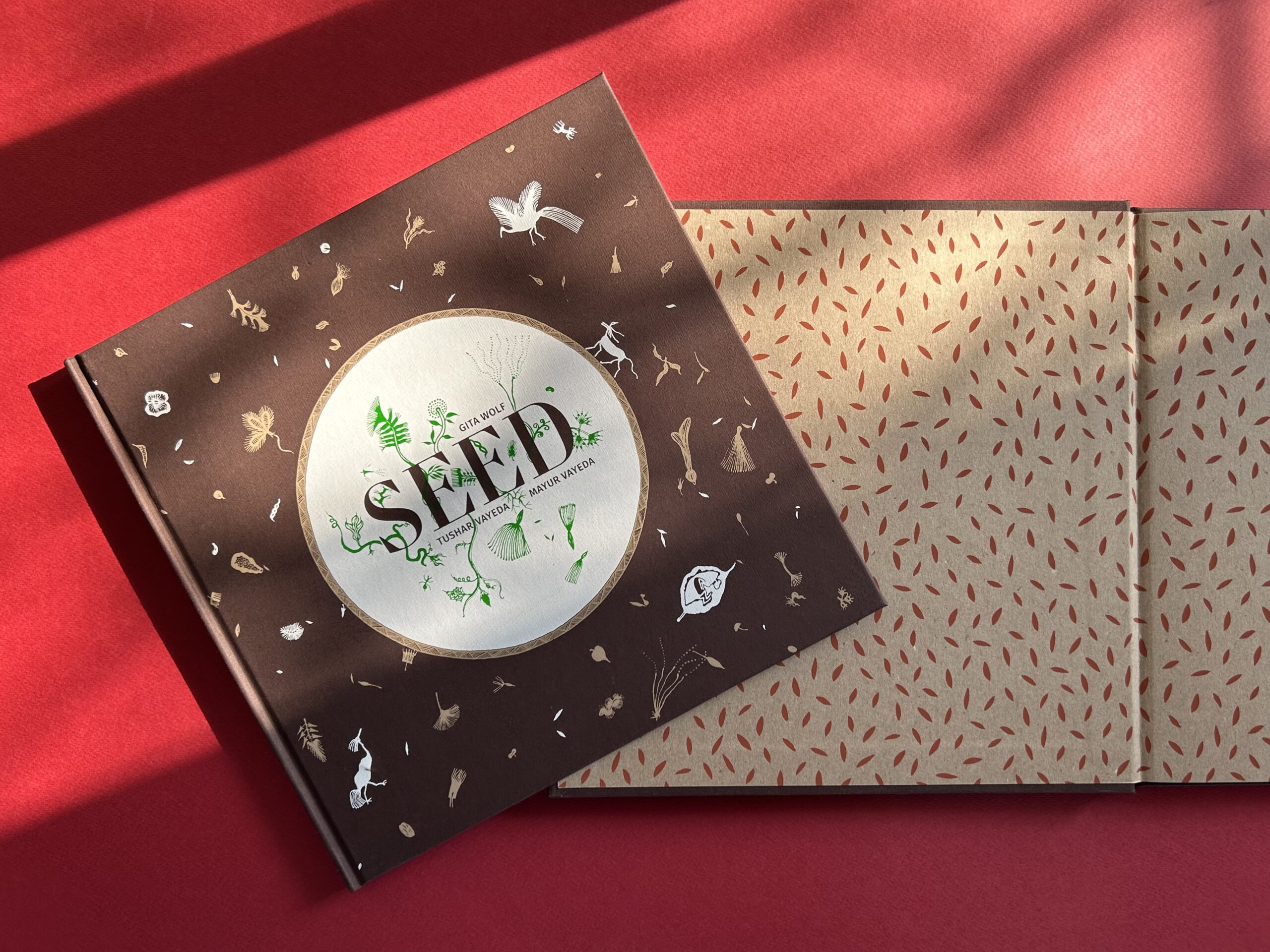
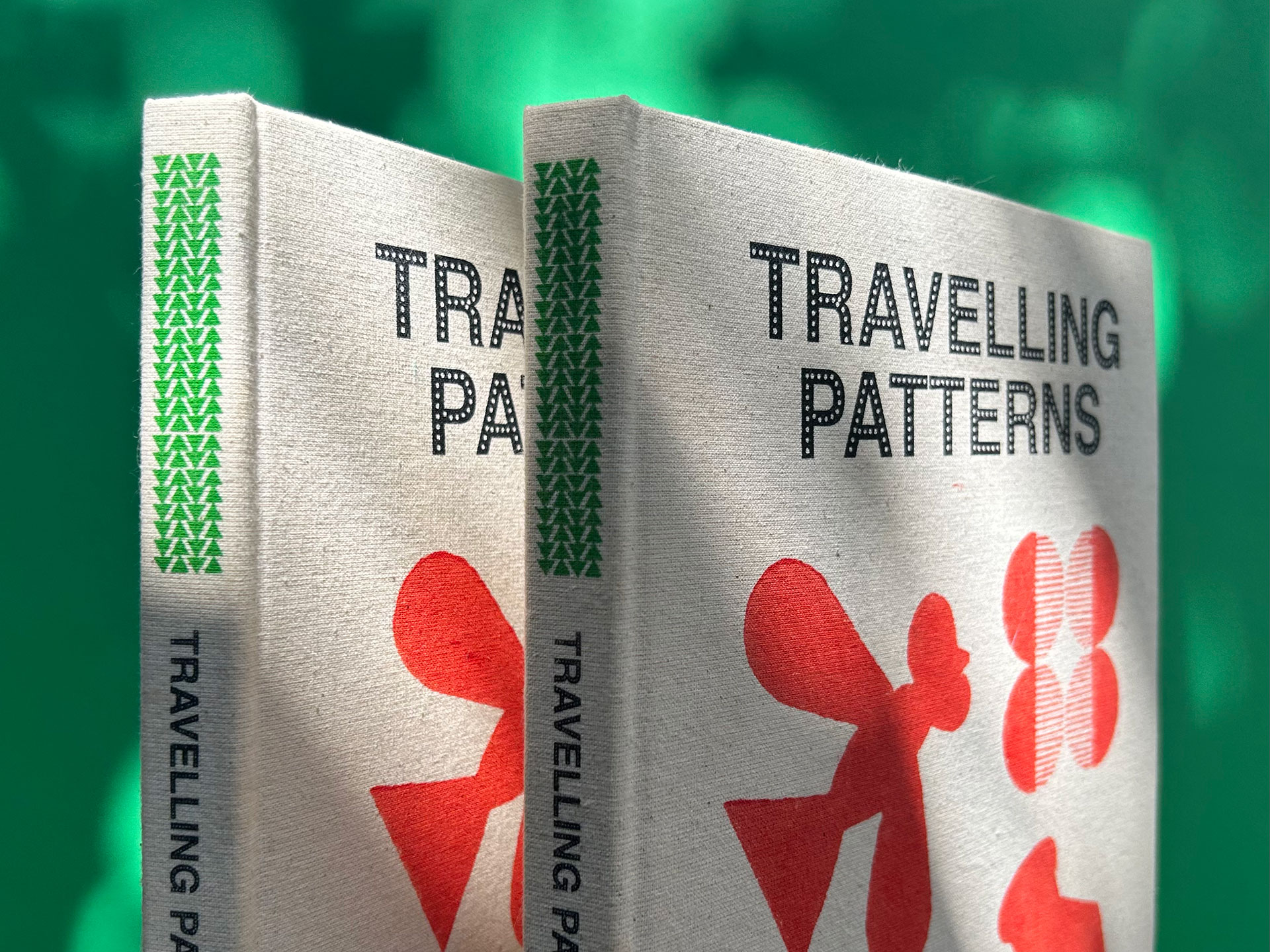
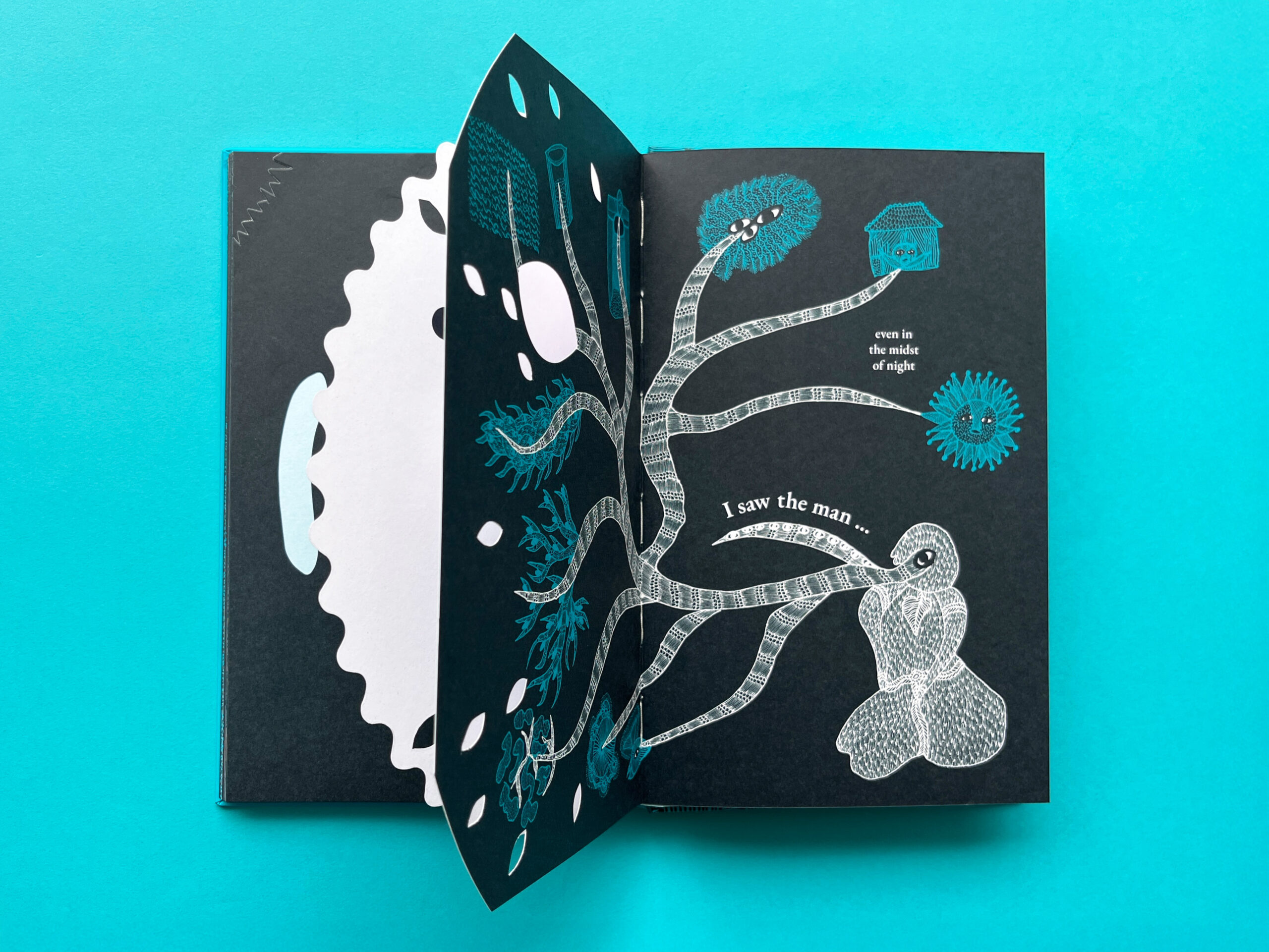
For much of this controversy, my colleagues at Tara Books have remained rather removed. Our handmade books are works of art and craft as much as they are conveyers of content. Arguably, the more the pendulum swings in the direction of ebooks, the more desirable a rare and beautifully printed book will become. You cannot feel the layers of silkscreen printed ink beneath your fingers on an IPad. You cannot admire vibrant vegetable-dyed paper on your Kindle. In an economy of myriad publishing platforms, niche and novelty markets and their enthusiasts will certainly remain. And after all, art itself does not threaten to move to an entirely digital platform; within all that we term “art,” the medium is often wonderfully entangled with the message.

And so we have kept quiet here at Tara Books, reading and listening to the digital publishing conversation with keen interest and a careful distance. We are certainly not opposed to digital books, and we hope that we will find a viable way to translate some of our children’s and visual titles to the IPad, Nook Color, and other developing technologies. But there is one consistent (and troubling) theme of this debate on which I, from Tara’s North American office in Seattle, WA, can be silent no longer.

Many of the questions and disputes listed above strike me as rather privileged in nature. These are, more often than not, issues raised by educated, middle class or affluent publishers, writers and media folk living in developed nations. Substantial populations within these nations can afford Kindles, Nooks and IPads – luxury items on which to consume ebooks. An even larger number of people within these countries can afford smart phones and computers – additional avenues to digital content.

Such questions of accessibility were debated and considered in our office long before the advent of e-books. How do we craft beautifully manufactured and designed books that are still affordable for the general public? It’s a difficult line to tread, and at Tara our strategy has been to try and stroke a balance balance – keeping the costs of our handmade, art books as low as possible, while not compromising on their fair trade production standards. Producing inexpensive paperback Tamil titles that are partly subsidized by their English equivalents. Having a range of offset printed as well as handmade books, that address important issues such as child labor and human rights.

The digital revolution, however, adds a whole new dimension to such debates. How do ebooks, ereaders and “eliteracy“ reach/affect/engage the 15.1% of the US population now living beneath the poverty line? How do ebooks, ereaders and eliteracy reach/affect/engage the average student in India, Haiti, Chile, Gaza, Kenya or Afghanistan? And do those who have the most to say about (and, in some cases, the most money to earn from) the digital debate even concern themselves with the important questions of class and economics that arise when the very way we communicate with the written word is changing?

Over the next month here on our blog, I will reflect on two recent contributions to the digital publishing debate. I would like to look at the presence and absence of socio-economic considerations in these conversations. The first is by designer/publishing consultant/writer Craig Mod, entitled Post-Artifact Books and Publishing, originally published on Craig’s website in June of 2011. Craig and I worked briefly on a few projects for another publisher, and I deeply respect and admire his innovative way of thinking. But this piece also riled me up, and I have long struggled to find the time to appropriately respond to his essay.

The second is a more recent interview with Richard Nash in The Boston Review. Nash used to head up Soft Skull Press and, most recently, founded the publishing platform Cursor. He discusses the role of a publishing house as the bridge connecting communities, of the link between readers and authors. I whole-heartedly agree with Nash’s understanding of what presses (should) do. I wanted to be in this industry in order to connect readers with writers, to join and celebrate in “the tribal nature of culture” (Nash’s phrase). In this space, I’ll briefly look at Nash’s idea of community as central to the economies of reading and writing, and compare it to the Marxist understanding of human community (as opposed to isolation) as the source of true personal and economic freedom.

I, like Craig Mod, Richard Nash and Karl Marx, believe in the potential of the community. In my view, Tara Books is a thriving example of such potential. Tara developed into a global community of artists, authors, craftspeople, designers and professionals precisely so that more consumers can have access to stories, to imagination, and to art. But as publishers and librarians and the media debate and explore books in the 21st century, we must consciously create our delivery platforms and our publishing projects with global accessibility and affordability in mind. It is not enough to be innovative, it is not enough to be radical. As bridge-builders between stories and storytellers, word-writers and word-readers, we must do radical, innovative good for the most number of people across social, economic and geopolitical boundaries.

Things to explore in the weeks ahead…

10 people like this post.
This entry was posted in Books, General, Tara Ethos and tagged , , , , , , , , , , , , , , , , . Bookmark the permalink. Post a comment or leave a trackback: Trackback URL.

4 Comments

  1. Posted September 15, 2011 at 7:02 am | Permalink

    Excited to be a part of this conversation! I’ve been quite influenced by Craig myself, so I’m veru curious to hear more “in the weeks ahead”…

  2. Posted October 2, 2011 at 11:46 pm | Permalink

    Such a well-written and considered post, thanks for sharing! I agree that books like your own are removed from this issue – perhaps your offerings are enhanced – as there is no competition for what you do with anything digital. For the rest of us in the publishing industry, we going to have to either make our “offline offerings” more beautiful and worthy of the medium, or get involved in the digital shift and all the chaos – and excitement – that this represents.

  3. jenna
    Posted November 28, 2011 at 2:14 pm | Permalink

    This was a very interesting and well-informed blog post! I didn’t think I’d ever be one of those people who read books digitally, but I’ve grown to love them now. I even have my kids on digital books for children. They read them on my iPad.

  4. Ayesha Vemuri
    Posted February 5, 2013 at 12:15 pm | Permalink

    Interesting article. The point you make about this debate on the extinction of the published book being an essentially elitist one is particularly important, I think. I agree with you that for the present and for the near future, this may indeed be the case, but what about when iPads and Kindles become cheaper, or when affordable Chinese and Indian ones are made? Will this elitism still be a problem then?

    And that then leads to the question of whether the printed book, and especially the handprinted book, will then become the property of the elite. I hope that doesn’t happen, as someone who makes and loves all forms of book art, and don’t think it will, but I think it’s an interesting question to consider, especially as books venture more and more into the world of Fine Art and the digital book becomes more and more common.

    How do you at Tara Books think about things like pricing with artists books? Has that been a subject of debate? I’m curious to know.

One Trackback

  • By Social Publishing on October 3, 2011 at 1:32 pm

    [...] Tara Books Blog a union of fine form with rich content Skip to content AboutLinksContact Us « A Matter of Class? [...]

Post a Comment

Your email is never published nor shared. Required fields are marked *

*
*

You may use these HTML tags and attributes <a href="" title=""> <abbr title=""> <acronym title=""> <b> <blockquote cite=""> <cite> <code> <del datetime=""> <em> <i> <q cite=""> <strike> <strong>